.png?width=80&height=80&name=circle-cropped%20(2).png)
HubSpot Content Hub is HubSpot’s all-in-one content management platform, combining a CMS, blog, landing pages, personalisation, governance controls, and — as of 2026 — a deeply integrated AI layer called Breeze.
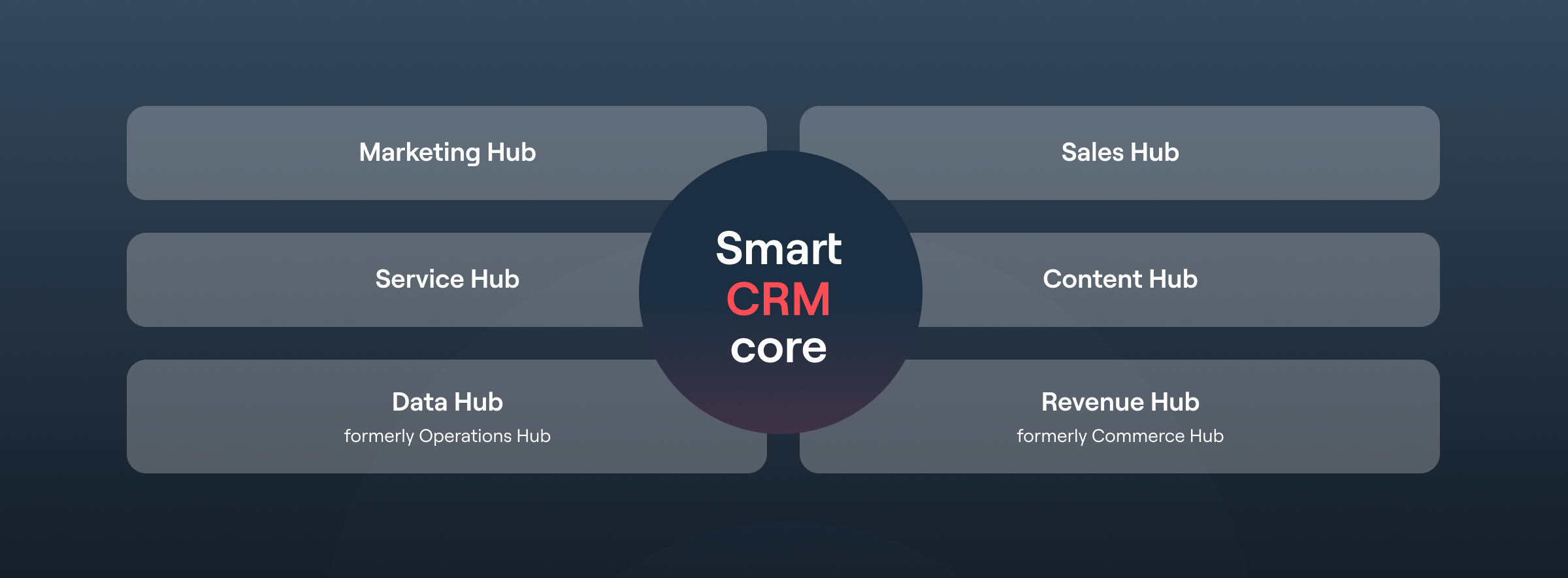
It sits alongside Marketing Hub, Sales Hub, Service Hub, Data Hub, and Revenue Hub on HubSpot’s Smart CRM, which means every piece of content you publish is connected to the same customer data your sales and service teams work from.
This guide covers what Content Hub includes in 2026, what has changed since its launch, how Breeze AI works within it, current pricing by tier, and how enterprise teams should evaluate it.
What is HubSpot Content Hub?
Content Hub is the evolution of HubSpot’s former CMS Hub, expanded from website management into a full content operations platform.
It handles website pages, blogs, landing pages, podcasts, case studies, and gated content from a single system, with the CRM underneath powering personalisation and attribution.
For marketing leaders, the practical difference from a standalone CMS is that content, contact data, and revenue reporting live in one place: you can trace a blog post through to the pipeline it influenced without stitching together separate tools.
What’s new in Content Hub in 2026?
If you last evaluated Content Hub in 2024 or 2025, the platform has changed significantly. The most important updates:
- Breeze Assistant replaced ChatSpot. HubSpot’s conversational AI (formerly ChatSpot, briefly Breeze Copilot) is now Breeze Assistant — a context-aware assistant embedded across the platform that understands your CRM data, role, and business.
- Breeze Content Agent. An autonomous agent that researches and drafts blog posts, case studies, landing pages, and emails inside Content Hub. It requires Content Hub Professional or Enterprise, and works best in a human-in-the-loop model: the agent drafts, your team edits for accuracy and brand voice.
- AI visibility tracking (public beta). HubSpot’s Spring 2026 release added tools to measure, track, and improve your brand’s visibility in AI-generated answers — bringing answer engine optimisation (AEO) measurement natively into the platform.
- Content Remix and Brand Voice matured. Remix repurposes one asset into summaries, social posts, emails, or page drafts; Brand Voice keeps AI output consistent with your defined tone.
- The hub line-up changed around it. Operations Hub is now Data Hub, and Commerce Hub became Revenue Hub in June 2026 — worth knowing when you’re mapping Content Hub into a wider HubSpot architecture.
What are Content Hub’s core features?
Website and content creation
A drag-and-drop website builder with customisable themes, landing pages, forms, and CTAs.
Smart content personalises pages by segment, vertical, or lifecycle stage without maintaining duplicate pages. Content types extend beyond web pages and blogs to podcasts and case studies.
AI-assisted production
Breeze Assistant and the Content Agent handle first drafts, meta descriptions, and repurposing; the AI Image Generator produces supporting visuals; AI translations accelerate multilingual content.
Generation carries usage limits, so high-volume teams should plan around credit consumption.
Governance and control
Content approvals and partitioning let enterprise teams control who can create, edit, and publish which assets — essential once multiple teams, brands, or regions share one portal. Memberships and gated content support customer portals and premium resources (Enterprise tier).
Search and answer engine optimisation
Built-in SEO recommendations flag technical and content issues, and the new AI-visibility tooling extends measurement to how your brand appears in AI-generated answers, increasingly where enterprise buyers start their research.
Multilingual and multi-site management
Content Hub supports multi-language content variants, region-specific pages, and multi-domain management from one portal — a genuine differentiator for international teams.
How much does HubSpot Content Hub cost in 2026?
As of July 2026, Content Hub is sold in three tiers:
- Starter — from around $15 per seat/month (billed annually). Custom domains, HubSpot branding removal, and core CMS features. Suited to small teams, not enterprise content operations.
- Professional — from around $450–500/month, including three core seats. Unlocks smart content, A/B testing, SEO recommendations, Content Remix, and the Breeze Content Agent. This is the realistic entry point for a working content team.
- Enterprise — from around $1,500/month, including five core seats. Adds content approvals and partitioning, memberships, adaptive testing, additional root domains, and multi-site governance.
Two cost considerations beyond the licence: Professional and Enterprise purchases carry a one-time onboarding fee when bought directly from HubSpot, and Breeze agent usage is metered through HubSpot Credits, so AI-heavy workflows have a consumption component.
Pricing changes periodically — always confirm current figures on HubSpot’s pricing page.

Which Content Hub tier is right for enterprise teams?
For organisations with 200+ employees, the decision usually isn’t Starter versus Professional — it’s Professional versus Enterprise, and it hinges on governance rather than features. Ask three questions:
- Do multiple teams, brands, or regions publish from the same portal? If yes, partitioning and approvals (Enterprise) prevent the content sprawl that erodes brand and compliance control.
- Do you need gated or member-only content — customer portals, premium resources, partner hubs? Memberships are Enterprise-only.
- Is your content estate multilingual or multi-domain? Enterprise’s additional root domains and Data Hub’s governance tooling matter at that scale.
The other enterprise consideration is implementation risk. Content migrations move significant volumes of valuable data, which is why working with a partner holding ISO/IEC 27001:2022 certification, covering information security management across the engagement, is worth weighing in your evaluation.
How does Content Hub fit with the rest of HubSpot?
Content Hub shares the Smart CRM with Marketing Hub (campaigns, email, automation), Sales Hub, Service Hub, Data Hub (data quality, sync, and governance — formerly Operations Hub), and Revenue Hub (quoting, billing, and payments — formerly Commerce Hub).
In practice, this means the blog post a prospect reads, the form they complete, and the deal your sales team works on are one connected record.
For CMOs measuring content’s contribution to the pipeline, native attribution is the strongest argument for Content Hub over a standalone CMS.
FAQ
Is HubSpot Content Hub the same as CMS Hub?
Content Hub is the successor to CMS Hub. It includes everything CMS Hub offered: website hosting, themes, blogs, landing pages, and adds AI-powered content creation, remixing, governance, and multi-format content types like podcasts and case studies.
Does Content Hub include AI?
Yes. Breeze Assistant is available across tiers, while the Breeze Content Agent, which autonomously researches and drafts content, requires Content Hub Professional or Enterprise. Agent usage consumes HubSpot Credits.
Can Content Hub run multilingual websites?
Yes. Content Hub supports multi-language variants of pages and blogs, region-specific content, and multi-domain management, making it a strong fit for international organisations.
What replaced ChatSpot?
ChatSpot was deprecated and its capabilities absorbed into Breeze Assistant, HubSpot’s platform-wide conversational AI. If you see references to ChatSpot in older content, read them as Breeze Assistant.
Do I need a partner to implement Content Hub?
Not strictly, but complex migrations, custom integrations, and multi-site builds are where implementation partners add most value. HubSpot’s advanced CMS accreditation exists specifically to identify partners verified for complex migrations and custom development.
Unlock the full potential of HubSpot's Content Hub
Considering Content Hub for an enterprise content operation? Huble is an Elite HubSpot partner and HubSpot’s 2024 Global Partner of the Year, with ISO/IEC 27001:2022-certified delivery.
Talk to our team about implementation, migration, or getting more from the portal you already have.