
Winning HubSpot's Battle of the Builders:

AI agents that remove the expert bottleneck in lead qualification

Who is the client?

The client is a global manufacturer of aseptic packaging machinery for the pharmaceutical industry. It is a category leader with more than 2,000 machines in operation and customers in over 80 countries. Its machines fill and seal single-dose products such as individual eye-drop vials, inhalation solutions and injectables.


The company initially came to Huble for HubSpot Marketing Hub and SEO work. One of the early projects we partnered on focused on building a more efficient lead capture process: a downloadable guide that let prospects assess for themselves whether they are a product fit. It worked, but it also exposed a deeper challenge.


Prospects would self-qualify, hand over their details, and then join an engineering queue that took two weeks to confirm. The sales cycle was long and technical, with the first step of every sale dependent on scarce engineering time. That gap raised the question that became this project: rather than asking prospects to match themselves and then wait, why not build the AI to qualify them?

The challenge: why prospects waited two working weeks for an answer?

Every prospect asked the same first question: will this technology work for my product? Although simple at face value, the answer is rooted in deep technical expertise.

The manufacturer's machines fill and seal pharmaceutical products. Not every liquid can run on them. How thick it is, whether it foams, how it reacts to air and heat, and how much goes into each dose all matter. Only an experienced engineer was able to weigh those factors, and the engineers were busy on live customer projects.


The company had a qualification questionnaire but prospects rarely knew the answers with precision. One of the answer options for viscosity was "unclear, probably watery". Turning that into a reliable “yes” or “no” took an engineer's reasoning, so every inquiry went to the back of an engineering queue. This was a reasoning gap rather than an automation one.


The company's own standard was a reply within five days. In practice, the average was three times that at around two working weeks, while trade-show follow-ups took a day longer still. Around 500 times a year, a prospect who had just said "I'm interested" was told to wait.


What was the two-week wait costing?

The delay cost the company in three ways:

 

  1. Revenue at risk. Each enquiry represents a machine order averaging $3.5 million. During two weeks of silence, a prospect with a live project keeps evaluating, and a competing technology that answers inside that window is already in the conversation. The time kills deals, and this was the moment in the sales process most open to a competitor.

  2. Engineering time. Qualifying enquiries consumed 500+ hours of senior application-engineering time a year. Those are the same engineers responsible for commissioning machines for existing customers, so every hour spent on an early-stage enquiry was an hour taken from a paying one.

  3. Lost knowledge. Across 500 enquiries a year, prospects accumulated roughly 20 years of combined waiting time, every year. Worse, the outcomes left no trace. Why an enquiry was turned away ("too viscous, I think"), which alternative the prospect chose ("they went with glass"), which competitor was in the room: all of it lived in one engineer's memory and was recorded nowhere. The company could not say how many deals the delay had cost, because nothing was measuring it.
Battle of the Builders

The solution: how AI agents qualify a technical sales enquiry?

Huble's starting point was that the expertise already existed; it was just locked in a queue. So rather than automate around the engineers, we built a lead qualification system centred on their reasoning, and put it where the sale actually happens.

How a qualification run works

  1. Capture. At a trade show or on a call, the rep either logs the lead in HubSpot's lead, company and contact records, or simply records the conversation with HubSpot Call Intelligence, with the prospect's consent.

  2. Extract. Breeze Data Agent reads the transcript and fills the qualification properties, then researches the prospect's company to complete details such as location, which affects whether the manufacturer can serve them. It never researches the product itself.

  3. Reason. A custom reasoning agent, built in HubSpot Agent Builder, compares what it has against the engineers' screening criteria and past cases held in Knowledge Vault. It attaches a confidence score and a source to every parameter and works out the one or two questions still worth asking.

  4. Clarify. Those questions go back to the rep while the prospect is still in front of them.

  5. Screen. A custom screening agent applies the engineering decision logic and returns the verdict. The logic is deterministic, versioned and auditable, so every outcome can be traced.

  6. Route. Agentic Workflows orchestrate the whole run and deliver the result to the rep as a HubSpot task, with the right next step attached.

Which HubSpot features does the system use?

Component Type Role
Breeze Data Agent HubSpot, out of the box Reads transcripts, populates properties, researches the prospect's company
Knowledge Vault HubSpot, out of the box Holds the engineers' structured screening documents and past cases; the "engineer's brain"
Smart Properties HubSpot, out of the box Hold the qualification data with confidence and provenance per parameter
Agentic Workflows HubSpot, out of the box Orchestrates the run and delivers the output
Reasoning agent Custom, built in Agent Builder Decides what still needs asking
Screening agent Custom, built in Agent Builder Applies the decision tree and returns the verdict


Why AI, if the screening logic is a decision tree?

Because the tree was never the bottleneck. Huble kept it deterministic on purpose. What no tree can do is get from a 40-minute trade-show conversation, or from "it's a preservative-free eye drop, I don't know the viscosity", to the tree's inputs. The AI turns that uncertainty into parameters with confidence attached. The tree does the rest.

How are AI agents governed when they influence sales decisions?

An AI agent that influences a seven-figure sales decision in a regulated industry has to be governable from day one. Huble built the controls into the architecture rather than adding them after launch.

  • Humans in the loop. Every write to the CRM is approval-gated in HubSpot Agent Inbox, with the full run trail available for audit before anything is actioned. Parameters with low confidence are routed to a person rather than guessed.

  • Least-privilege access. Each agent can reach only the data and tools its specific job needs, exactly as access is scoped for an employee.

  • Confidential product data never leaves the conversation. The agents research the prospect's company, never the product, because pharmaceutical formulations are often confidential or pre-market. Product details come only from the prospect and the rep, and transcript capture requires recorded consent.

  • Legal and product review during the build. Data handling was reviewed with the client's legal contacts as part of the build, not after it. Before go-live, the client's product management team checked a sample of outputs against their own screening paper. Every prospect-facing answer is reviewed and fed back into the Knowledge Vault.


The process is modular and transparent by design, so a decision can be critiqued at every step rather than accepted as a black box.

The outcome: what did the initial build prove?

The answer that used to take two working weeks now has the potential to arrive in under a minute. The efficiency gain is real, but it is the smaller of the returns.

  • Time to answer: two working weeks to under a minute, on every enquiry that has run through the system.

  • Running cost: about 300 HubSpot credits per enquiry. At 500 enquiries a year that is roughly 15,000 credits, or about $150 a month, the equivalent of a fraction of an engineer's salary in time saving.

  • Instrumentation: time-to-answer and outcome are now logged for every enquiry, so the revenue impact of speed can be measured directly for the first time.

A vision for the future

  • Engineering time: around 500+ hours a year from qualifying leads back to commissioning machines for paying customers.

  • Commercial case: with a $3.5 million average order, recovering a single order a year pays for the build and running costs more than 100 times over.

  • A record of every no. Each enquiry now leaves a structured record, including the ones that do not qualify, clustered by the criterion that ruled them out and the alternative technology the prospect was weighing. That is a map of unmet demand, and over time it becomes the engineering roadmap for the next generation of machines.

Conclusion

In September 2026, Huble walked away the winner of HubSpot's Battle of the Builders challenge at UNBOUND for the multi-agent qualification system we built for this global pharmaceutical machinery manufacturer.


The win recognised a build that took days, runs for the cost of 30 minutes of an engineer's time a month, and turned the most contested moment in the client's sales process from a two-week wait into an answer on the spot.
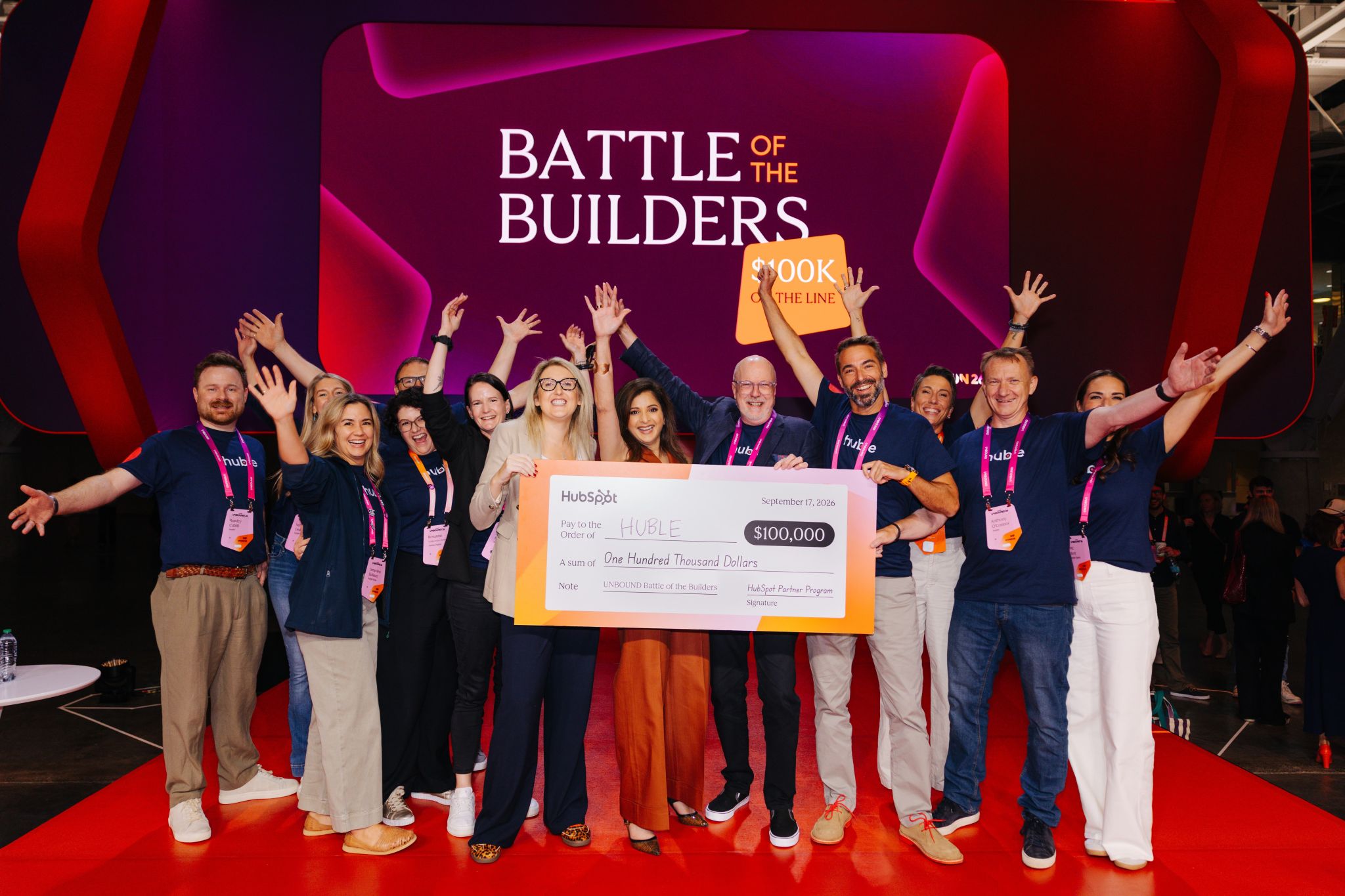
Huble team accepting the HubSpot Battle of the Builders prize at UNBOUND 2026

Related Customer Stories

Whitetail Properties Case Study

Whitetail Properties

Learn more about Huble's impact on Whitetail Properties' sales and marketing operations.

Sales & Revenue
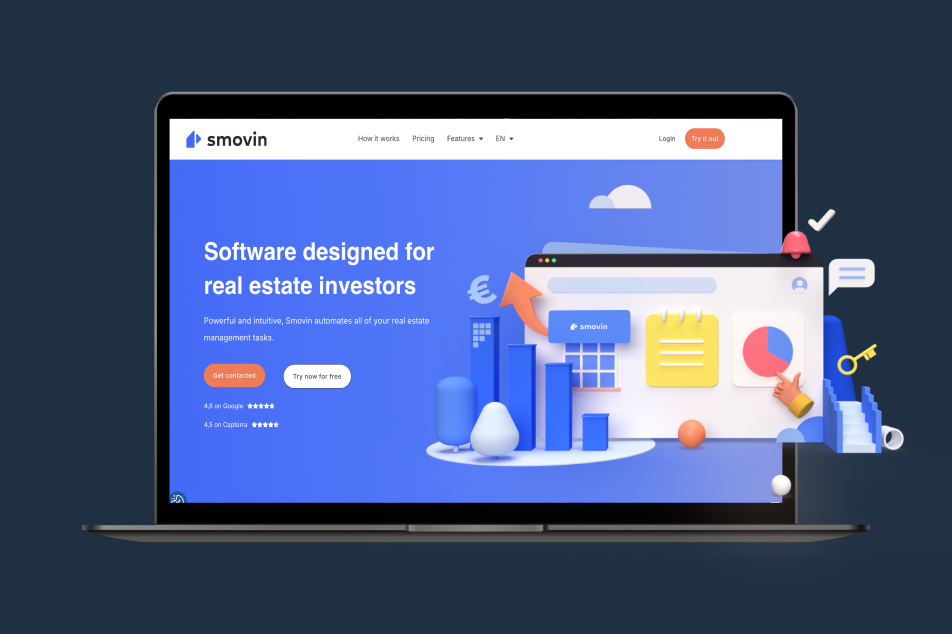
Smovin Case Study

Smovin

Discover how Huble helped Smovin achieve 85% activation conversion and reduce cost per lead by 50%.

Marketing Strategy & Tech

Bouygues Immobillier Case Study

Bouygues Immobilier

Discover how Huble leveraged social media prowess & enhanced user experience to generate leads and soar conversion rates for Bouygues Immobilier.

Marketing Strategy & Tech
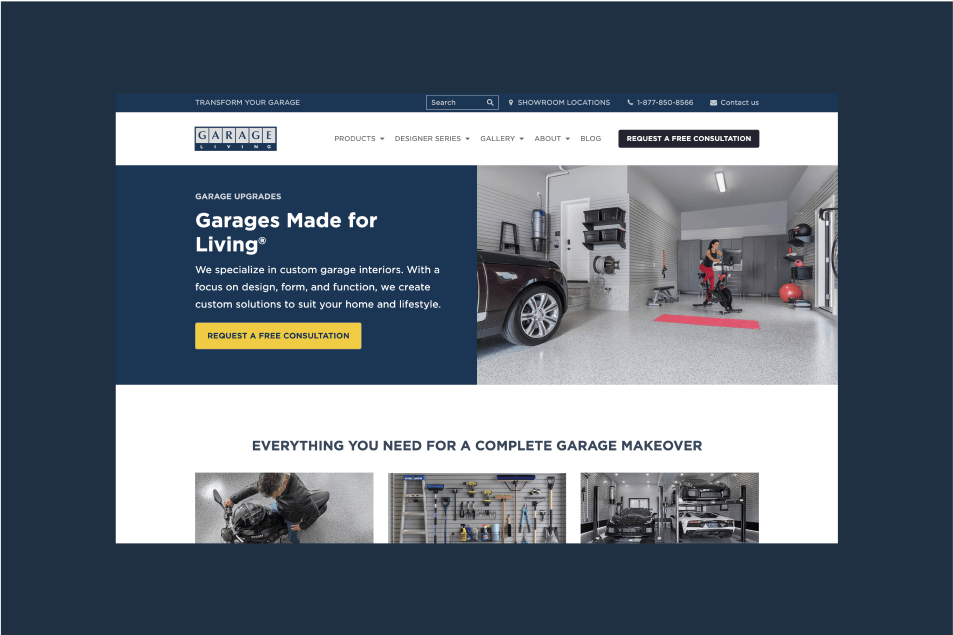
Garage Living Case Study-min

Garage Living

Revolutionise your sales efficiency with Garage Living's CRM and CPQ transformation. See how Huble's solutions have transformed Garage Living's operations.

HubSpot Implementations

Marketing Strategy & Tech

Sales & Revenue

Latour Petit Case Study

Latour & Petit

Learn how Huble helped Latour & Petit achieve an astounding 860% growth in monthly leads.

Marketing Strategy & Tech
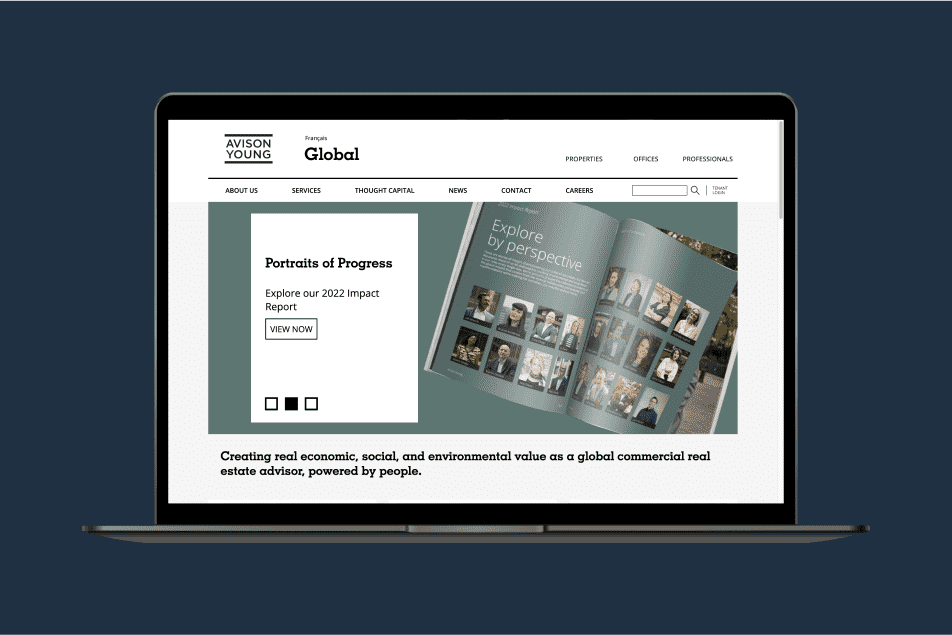
Avison Young Case Study

Avison Young

Learn how Huble helped Avison Young move its teams from four siloed CRMs, including Salesforce, to one, easy-to-use but very powerful CRM — HubSpot.

HubSpot Implementations

Knight Frank Case Study-min

Knight Frank

Find out how the Huble team helped Knight Frank use HubSpot to give marketing and key business units a unified view of its customer data.

HubSpot Implementations

Global Smart Affordable Housing Case Study-min

Global smart affordable housing

Learn how Huble helped a global leader in smart affordable housing unify their multinational offices under HubSpot.

Marketing Strategy & Tech

Sales & Revenue
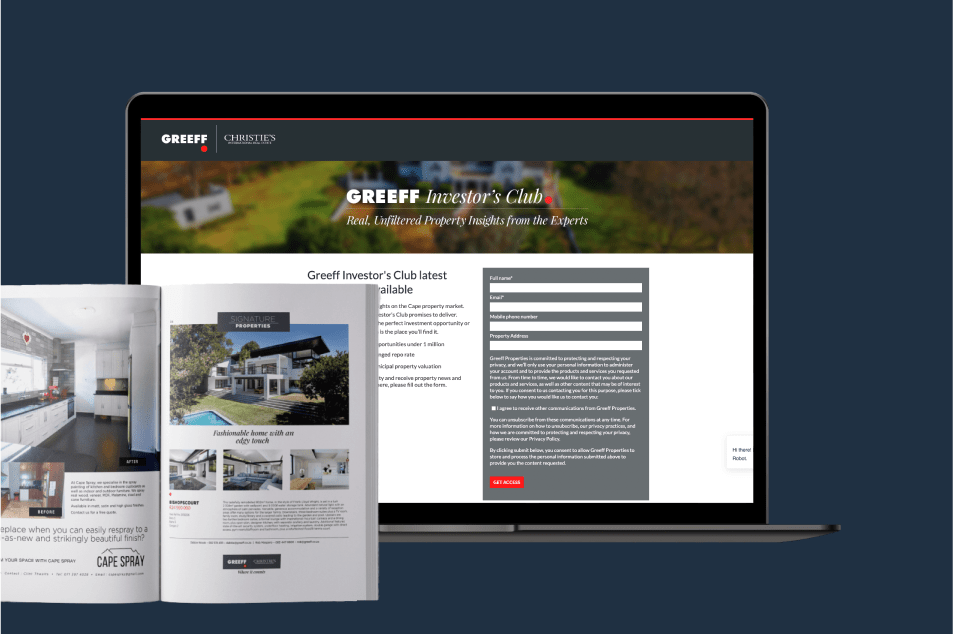
Greef Christies Real Estate Case Study-min

Greeff Christies Real Estate

Learn how Huble Digital helped Greeff Christies Real Estate launch onto the HubSpot CMS.

Marketing Strategy & Tech